You searched for:
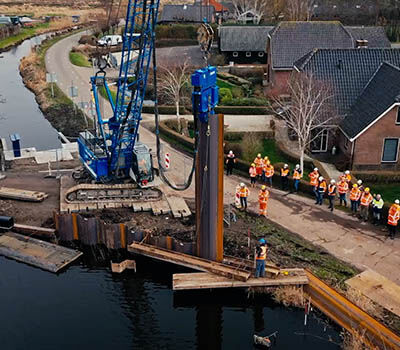
Water control and stress-free living guaranteed The slow-moving Meije river runs through the rural settings of the Groene Hart area of the Netherlands, with its picturesque landscapes, meadows, rustic farms and homes. To keep the water in check in the future too, regional water authority Hoogheemraadschap De Stichtse Rijnlanden (HDSR) and the Woerden municipal authorities decided to have reinforcement and improvement work carried out on the Meijekade dike along the Meije river in the municipality Woerden. This flood barrier did not meet the current standards for the height and stability of dikes and embankments. There was also a lot of room for improvement on the Meijekade dike. The surface of the nearly five-kilometer-long road running on top of the dike was in poor condition. The project, which we took on as the Combinatie Peek Mourik vof consortium, involved a combined approach of dike and embankment reinforcement and road construction (specifically road resurfacing), as well as additional improvements to lighting and the public space along the Meije river, for example with wooden revetments and nature-friendly banks. This is all familiar territory for Mourik, but with a specific challenge: our client HDSR had made individual agreements with all residents along the Meijekade dike concerning the work that would have to be carried out on the residents’ own land. This meant that it was also up to us to ensure that these residents were satisfied too. Various solutions for embankment improvement and dike reinforcement We took various measures to improve the embankment and reinforce the dike, depending on the height and stability of the flood barrier. On part of the Meijekade dike we raised the entire flood barrier, in some parts increasing the height by as much as 40cm, or constructed a double-layered, cascading embankment, with a low and narrower embankment on top of the existing dike. Along the rest of the dike (1.8 kilometers long), which was not sufficiently stable, we installed a steel sheet pile wall to add reinforcement. The finish of this reinforcing wall is special. Thanks to perforations in the wall capping, vegetation can pass through so that this steel structure will eventually blend in perfectly with the landscape. Installing the sheet pile wall was a project in itself. Many cables and pipes run under the Meijekade dike and under the water. But the question is, can you still rely on the original drawings after so many years? To prevent damage to the cables or pipes, we had depth measurements carried out along the entire route to determine the exact position and depth of the cables and pipes, and to “fold” the sheet pile wall around them, as it were. Before we could do that, we had extensive consultations with all stakeholders, including the grid operators, and included everyone in our plans. Tailor-made solutions for local residents The people living along Meijekade dike were a very important group of stakeholders. For many of them, they see the dike as part of their front yard, so to speak. No wonder that some were concerned about raising the dike and about the new sheet pile wall, which in some cases would even run right through their yard. How would that impact the view? Our client HDSR agreed with each affected resident on a solution tailored to them specifically. So, in effect we had 58 individual clients, and we did everything we could to satisfy each and every one of them. We raised and even redesigned yards, mounted wooden cladding on the sheet pile wall and had many conversations. We also continuously monitored satisfaction with the works via BouwApp, a special app that makes it easy to share updates on construction works with local residents and interested parties. We are increasingly making use of this app. We’re glad to say that the end result was happy faces all around. We’re truly in our element with these types of projects: a combination of design and implementation, with a lot of attention to stakeholder management, in a challenging location (a narrow dike with people living right alongside), and with several challenges that require smart solutions, like avoiding cables and pipes and the partial reuse of the old road structure for the new road so as to save on asphalt. Reusing construction materials was just one of the sustainability measures we took: for example, we also used recycled steel for the sheet pile wall and deployed Euro 6 and Stage V equipment or even zero-emission electrical equipment for the works.
We either work safely or not at all. We're not the only ones emphasising this, but it's a fundamental truth. For a family-owned business, this sentiment holds even more weight. To make it clear: we don't tolerate harm to individuals, assets, the environment or the community. Our unwavering objective is zero accidents. To achieve this, we have safety guidelines and protocols in place. However, the culture we foster is even more crucial. Safety is a responsibility shared by all.
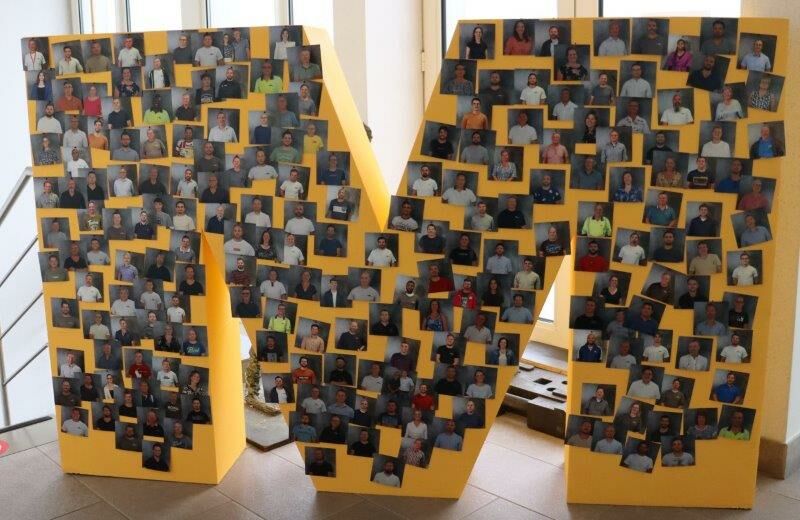
Every year we organize our safety day in which all our colleagues participate. During the last edition, the Mourik values were taken as the starting point. These were addressed through a performance based on situations straight from practice. Klein Barnum provided an unforgettable performance. Through recognizable scenes, the actors made us think about the dilemmas we face at Mourik. It provided a unique blend of entertainment and awareness. After the performance, it was time for reflection. We divided into groups to discuss the scenes, share experiences, and reflect together on how we can be even more conscious of safety in our work environment. Hereby we would like to emphasize how important safety is to us. Not only during Safety Day, but every day. Together we make sure that at the end of the day we can all go home safe and sound. Because you know, safety is not a coincidence, it is a choice.
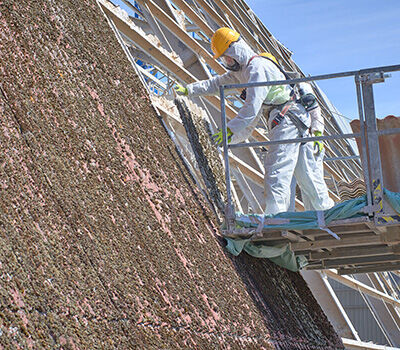
Prayon provides innovative phosphate and fluorine solutions to numerous industries ranging from animal nutrition, construction and horticulture to chemicals and the personal and healthcare industries. Puurs is home to Prayon's second-largest plant, with industrial manufacturing operations and an R&D center. On the site are two phosphate warehouses from around 1950, covered with asbestos-containing roofing sheets. Mourik was commissioned to remediate one of these sheds, using our expertise in asbestos removal supplemented by industrial cleaning with high-pressure units.
So how do we move forward? An engaged steering committee guides the process in the right direction. Together with colleagues from different functions and departments, we start an interactive workshop. During this session, we create a clear overview of safety tasks and indicate who is responsible for what: the prevention department, project management and implementation. Together, we look at what everyone in his or her function can do to improve safety. We have colleagues who are on site every day and put safety into practice. Their experience and insights are a great asset in this session. The workshop is the start of further actions, such as strong safety leadership and clear agreements on safe workplace behaviour. This is how we build a strong safety culture in line with our strategy to work with unrivalled safety.